



How to distinguish genuine leather from synthetic and vegan materials
It happens more often than you might think. A bag that looks like genuine leather turns out to be a simple plastic imitation, an item labeled "synthetic leather" is actually second-grade animal leather, and "vegan leather" proves to be little more than PVC. The market is full of gray areas, and navigating it is not always easy, especially when shopping online, where touch and smell cannot help.
Yet some methods for recognizing what we have before us do exist. These are tricks that expert leatherworkers, restorers, and vintage buyers have used for decades. And today they are also useful to consumers who want to understand before proceeding to payment.
Genuine leather, synthetic leather, and vegan materials: the basics to understand what we are talking about
Before the tests, a brief conceptual map. Because the three categories are often confused, and understanding the difference between genuine leather and synthetic (and vegan) leather is the starting point of any sensible assessment.

Genuine leather is a material of animal origin. It is obtained by tanning the hides of cattle, sheep, goats, pigs, and more rarely other animals. The process transforms raw hide into a durable, workable, resistant material. There are several types: full-grain leather (the highest quality), corrected-grain leather, suede, nappa. All of animal origin, with their own production chain linked to farming and tanning.
Synthetic leather is a material that imitates animal leather using chemical compounds. The two most common types are PVC (polyvinyl chloride) and polyurethane, both derived from petroleum. Under this category fall faux leather, imitation leather, eco-leather (note, in Italy the term has a precise and regulated meaning), and bonded leather: the latter is a mix of ground genuine leather scraps held together by synthetic resins.
The bio-based vegan material, on the other hand, is an alternative material that does not use animal components. It is of plant origin, the so-called bio-based: cactus, apple, pineapple, citrus, mushrooms, and others. These are the new frontier of sustainable fashion, with entirely independent technical and aesthetic characteristics.
7 practical tests to distinguish genuine leather from imitations
Let's now see how to tell if it is genuine leather that we have in our hands. Seven simple methods, which work in most cases and that anyone can apply without special tools.
- Smell test: genuine leather vaguely recalls wood or tobacco, and the more complex and more worked tanneries present more "pungent and distinct" olfactory data from the classics. Synthetic leather smells like plastic, like chemicals. It is perhaps the most immediate test and the most reliable for those who have a little experience. Bio-based vegan materials, especially those derived from cactus and oranges, have a pleasant rustic, leafy, herbal smell, while others are odorless.
- Touch and temperature test: genuine leather to the touch is cold at the beginning of contact and gradually warms up. Synthetic or bio-based derived leathers, on the other hand, remain cold, or warm up quickly upon contact with heat sources.
- Water drop test: apply a small drop of water to the surface. On genuine leather it is slowly absorbed, leaving a trace that then disappears. On synthetic or bio-based leather it remains on the surface like a bead, because the material is naturally waterproof.
How to read the genuine leather label and what to look for before a purchase
In Italy, the wording "genuine leather" is regulated and can only be used for products that are actually of animal origin, tanned according to precise standards. When this wording is absent, and perhaps replaced by vague formulations ("leather material", "leather type", "simulated leather", "leather look"), we are almost always facing a synthetic.
The wording related to vegan materials, on the other hand, can be more varied. "Vegan fiber" cactus fiber etc. To be detailed, the brand needs to specify the exact material - "Desserto cactus leather", "Apple Skin Uppeal", "Ohoskin orange fiber" - or display certifications such as the PETA Approved Vegan certification, which guarantees in a verifiable way the absence of animal components in the entire product.
On the label, another useful element is the country of production. Historic Italian leather goods retain a know-how that is recognized in the details: stitching, finishes, edge management.
The bio-based vegan material is recognized: because it is completely different from the synthetic “faux leather”
A clarification that deserves attention, because the vegan-vs-synthetic debate tends to overlap two categories that should be distinguished. Vegan fabrics are of plant origin - that derived from natural fibers, agricultural waste, food byproducts - it is not simply another form of plastic. It has a different composition, a different production chain, a completely different environmental impact.

A cactus fiber contains real organic matter, derived from the Nopal plant grown without irrigation in the Mexican state of Zacatecas. Cactus fiber bags have a soft and textured leather-like finish, but they start from an agricultural byproduct and not from a petroleum derivative. The same goes for apple, pineapple, and citrus fibers: each starts from natural matter and follows processes that minimize the environmental impact.
Recognizing a plant-based vegan fabric by touch requires a little experience, but some signs help. Often these leathers have a slightly lower weight than animal leather, a surface with a natural but not identical grain to animal leather, sometimes a faint characteristic smell (Desserto and Ohoskin have a vegetal scent). The touch is soft but not "plastic-like" as in low-quality synthetics.
Petroleum synthetics, on the other hand, remain recognizable for their coldness on contact, their "cardboard-like" patina, their more or less intense chemical smell, and a certain stiffness that does not belong to bio-based plant leathers.
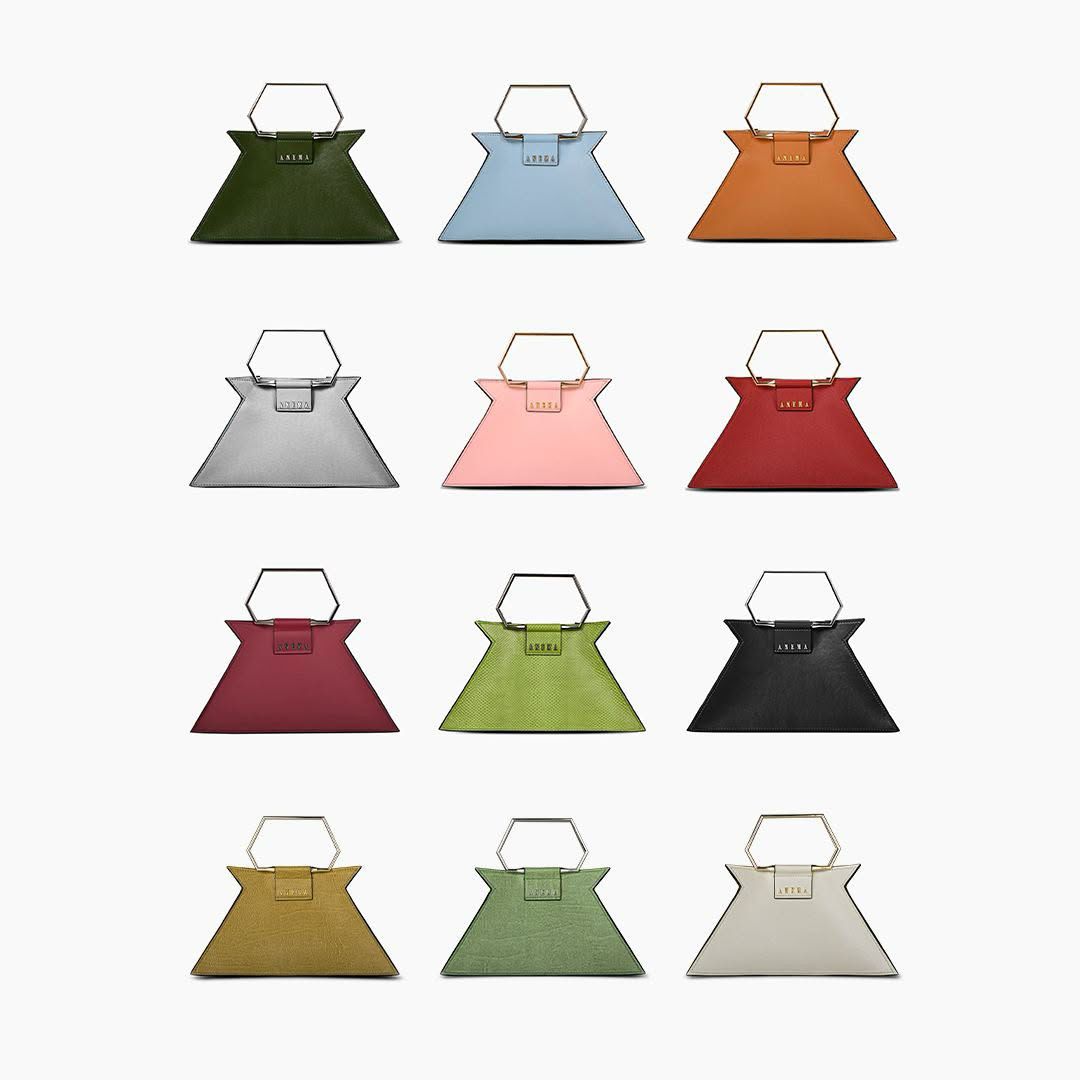
To delve deeper into the world of vegan materials, Anema Bags offers a collection of eco-sustainable vegan bags that includes several innovative leathers, all certified and traceable.
FAQ
Is a test for authentic leather always reliable?
No test taken individually is infallible. Trying at least three or four of those we have described gives a fairly precise answer. If the tests contradict each other, the material is probably hybrid or of high technical quality.
Can a leather be "half genuine and half synthetic"?
Yes, there is the so-called bonded leather or reconstituted leather (those used by most fast fashion brands). Technically it contains animal components, but structurally it is more similar to a synthetic. It is the category that generates the most ambiguity on labels because it is composed of minimal compositions of animal origin, linked to products like PU or plastic.
Are eco-leather and synthetic leather the same thing?
No, they are opposites. Eco-leather is animal leather (with low-impact tanning), while synthetic leather is a petroleum derivative. The fact that both contain the root "leather" or "eco" in the name often confuses, but legally they are distinct categories.
Is the price a reliable indicator?
Only partly. A handcrafted genuine full-grain leather bag has a high cost. A synthetic bag can cost little or a lot, depending on the brand. A quality bio-based vegan leather typically sits in the mid or mid-high range.
To conclude
Learning to recognize materials is one of those small acts of awareness that, over time, change the way we buy, also because today's market offers more choices than ever. Genuine leather, petroleum synthetics of varying quality, innovative plant leathers. Knowing how to distinguish them allows us to choose based on our values: ethical, environmental, aesthetic.

Written by Francesco Esposito


