



Fast fashion and environmental impact: the numbers you don't know
Every time we talk about the fashion industry, the language becomes slippery. "Capsule collections," "weekly drops," "viral trends": everything is dressed up as if it were pure creativity. Behind the shop windows of fast fashion giants, however, lies an industry that grinds up natural resources at paces that would have seemed inconceivable just a few decades ago. And it is precisely here, in the numbers, that the glossy narrative begins to crack.
What is fast fashion and why does it represent a serious environmental problem
Let's start with a definition: fast fashion is a production model born in the 1990s, consolidated in the early 2000s, based on three pillars: extremely short production times, ultra-competitive prices, and continuous collection turnover. Today we are talking about thousands of new styles introduced every day on a single platform.
When we say that the textile industry pollutes, we are not talking about some marginal impact. According to the most cited data from the United Nations Environment Programme (UNEP), the sector is responsible for about 10% of global greenhouse gas emissions, more than international aviation and maritime transport combined.
The problem is not "buying clothes". The problem is a model that has stopped producing clothes and has started producing units of rapid consumption. Between 2000 and 2015, the number of garments produced annually worldwide essentially doubled. An average person today buys 60% more clothes than fifteen years ago, and keeps them for half as long.
The environmental impact of the fashion industry in concrete numbers
When talking about the environmental impact of the fashion industry, it is best to abandon impressions and look at the data. We report some of the most documented ones, with sources recognized in public debate.
Water consumption: 2,700 liters of water for a single cotton t-shirt
Here is a figure that always surprises the first time you encounter it. To produce a conventional cotton t-shirt - from growing the plant to the finished garment - it takes about 2,700 liters of water. Enough to cover the drinking water needs of one person for two and a half years. An estimate published by the World Resources Institute which, despite the calculation variables that every model brings with it, gives the order of magnitude of the problem.
Cotton is particularly water-hungry. It is no coincidence that the intensive cultivation of this fiber is linked to well-known ecological disasters, such as the drying up of the Aral Sea, which until the 1960s was the fourth largest lake on the planet, and today is reduced to less than 10% of its original surface precisely because of the irrigation of Soviet and then Central Asian cotton plantations.
Then we add the water used in industrial phases: dyeing, treatments, finishing. 20% of industrial water pollution globally comes from the textile sector, according to the World Bank. Rivers that change color depending on seasonal dyes are a daily reality in several Asian production districts.
Microplastics and ocean pollution: the hidden face of polyester
For a long time, it was one of the most underestimated aspects of the problem. Most fast fashion garments are made of polyester, nylon, acrylic, which are all synthetic fibers derived from petroleum. Every time we wash these fabrics, plastic microfibers are released into wastewater, too small to be filtered by treatment plants, destined therefore to end up in rivers, seas, and oceans.
Estimates vary, but we are talking about about half a million tons of microplastics released every year into the marine environment from the domestic washing of synthetic fabrics alone. Roughly equal to the equivalent of 50 billion plastic bottles. The data comes from the Ellen MacArthur Foundation, one of the most accredited organizations on the circular economy, and continues to be cited in the European Commission documents on textile strategy.
Microplastics that then enter the food chain: fish, mollusks, sea salt, drinking water. Inside us, sooner or later. The pollution of the textile and fashion sector has found its quietest way precisely in our washing machines.
CO₂ and greenhouse gas emissions: why clothing weighs more than intercontinental flights
Let's go back to the 10% of global emissions attributed to the textile industry. It is a number we easily get used to, but it is worth understanding. It means that every year fashion contributes to climate change with more greenhouse gases than all the commercial flights on the planet and all maritime cargo traffic produce together. It means, in absolute terms, about 1.2 billion tons of CO₂ equivalent annually.
Emissions are distributed along the entire supply chain. Raw material extraction (cotton or petroleum for synthetics), dyeing and chemical treatments, global transport of garments, energy in stores, domestic washing, final disposal. Every step counts. Fast fashion multiplies these steps because it multiplies volumes, and consequently amplifies the overall carbon footprint.
Textile waste: where do the clothes we no longer wear really end up
A statistic that particularly strikes: every second, worldwide, the equivalent of a truck full of clothes ends up in a landfill or is incinerated. Sixty trucks a minute, 3,600 an hour, almost 87,000 a day. The data comes from the same Ellen MacArthur Foundation and describes a chain that starts from overproduction, passes through rapid consumption and ends in massive disposal.

Only about 12% of textiles globally are actually recycled, and barely 1% are recycled in "closed loop", that is, transformed into new garments. The rest is "downcycled" into lower-value materials (padding, industrial rags), sent to developing countries for second-hand markets, or simply burned to make room for new collections.
The case of the Atacama Desert, in Chile, has become the visual symbol of this waste. Tons of unsold or discarded clothes from the Western hemisphere accumulate there, forming mountains of fabric visible from satellite. An open-air fashion cemetery, documented by international reports that have shaken public opinion.
Slow fashion vs fast fashion: two industrial models at opposite ends
Slow fashion vs fast fashion is one of the most told oppositions in recent years. They are two production philosophies that respond to opposite logics. Fast fashion maximizes volume, speed, marginality; slow fashion slows down times, chooses short supply chains, favors quality over quantity, puts traceability at the center of the story.
Concrete differences? A fast fashion bag is designed to last one season; a slow fashion bag to last years. A fast fashion garment is often born in a factory in a country with fragile labor rights; a slow fashion garment is born from declared, often local, supply chains, with verifiable conditions. The first uses very low-cost fabrics, the second invests in quality materials: certified natural fibers, innovative plant-based leathers, traceable recycled fabrics.
There is also a time difference. Fast fashion compresses: from design to store in two weeks. Slow fashion expands: months of research on materials, artisanal development, limited productions. Two ways of thinking about work and consumption that end up touching broader dimensions than the simple act of dressing.
Concrete alternatives: innovative materials and circular fashion as a systemic response
The good news is that something is changing. Alternative sustainable fashion is no longer a laboratory experiment, it is a sector with consolidated industrial supply chains, important investments, international brands that have chosen to build an identity around these values.
Plant-based and bio-based fibers: the new generation of materials that is rewriting leather goods
Desserto, obtained from the Nopal cactus grown in the Mexican desert without irrigation. Apple Skin, produced from the waste of the juice industry in Trentino-South Tyrol. Ohoskin, which recovers pectin and cellulose from the peels of Sicilian citrus fruits. Piñatex, from Philippine pineapple leaves. Each of these materials starts from a waste or a low-impact natural resource, and transforms it into a concrete alternative to animal leather and petroleum synthetics.
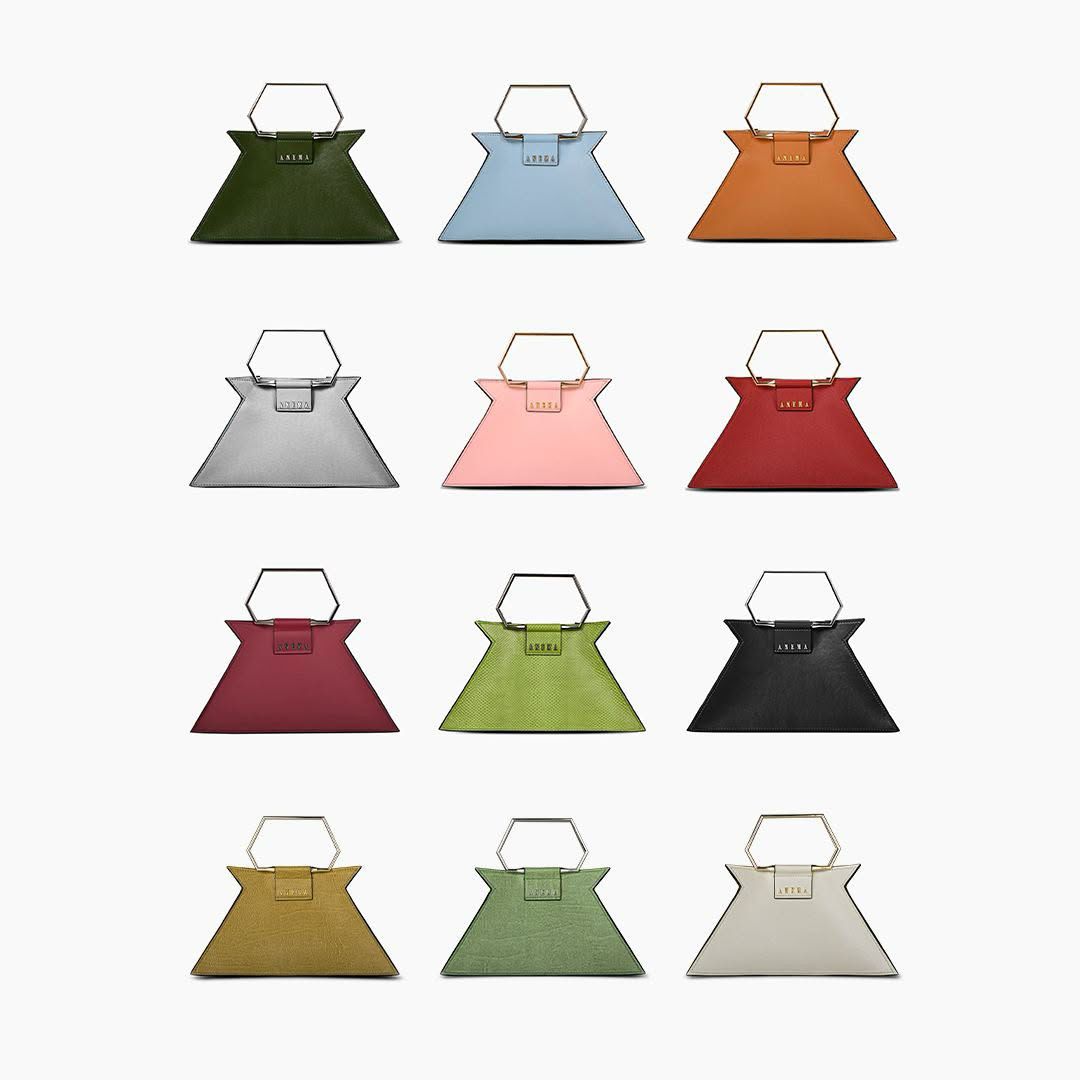
Anema built its collection precisely around these fibers. The cactus fiber bags combine Desserto with the Neapolitan artisanal tradition, the apple skin bags transform a food waste into a designer accessory, the GOTS organic hemp bags focus on the most resistant natural fiber. There is also an entire line of accessories in recycled materials, designed for those who want to close the circle of the circular economy. The whole thing covered by PETA Approved Vegan certification, third-party guarantee on the absence of any animal component in the supply chain.
How to dress sustainably without turning your wardrobe upside down overnight
The first, perhaps the most powerful, is buy less. Before every purchase, stop and ask yourself: will I wear it at least thirty times? The "rule of thirty uses" has become popular in ethical fashion movements precisely because systematically applied it reduces impulse purchases. The second is learning to read labels and taking thirty seconds before putting a garment in the cart.

Then there is the whole chapter of garment care. A garment that lasts twice as long is worth, environmentally, as if you had bought one less. Also second-hand markets, vintage, second-hand garments are concrete tools: every rescued dress is one less dress that has to be produced from scratch.
Finally, when investing in an accessory - a bag, in particular - it makes sense to aim for quality and innovative materials. The eco-sustainable vegan bags of good workmanship last for years, age well, tell a different story compared to the plastic bag disguised as a luxury accessory. And it is precisely the durability over time the most sustainable gesture we can afford.
FAQ
Does buying less and better cost more or less at the end of the year?
Often less, if you do the real math. A quality garment that lasts five years costs less than five cheap garments bought in five seasons. In addition to taking up less space in the closet and involving fewer daily decisions.
Are synthetic fibers all to be avoided?
Not all in the same way. Recycled polyester has a much lower footprint than virgin polyester. The microplastics problems concern every synthetic during washing, but specific products help contain the release.
What can I do with my old clothes instead of throwing them away?
Donate them to organizations that re-place them in second-hand circuits, take them to brands that have take-back and recycling programs, sell them on dedicated platforms, transform them with creative upcycling.
To conclude
The numbers we have lined up are simply photographs. They describe an industrial model that has produced wealth and democratized access to clothes, sure, but at environmental and social costs that today we begin to see clearly. It is not all lost, fortunately, because there are concrete alternatives, innovative materials, brands that work differently.

Written by Francesco Esposito


