




How to Spot Greenwashing in Fashion: 7 Signs
There is one word that has been used frequently in recent years on clothing labels, in press releases, in advertising campaigns, on store signage: sustainable. Suddenly, everything became sustainable. T-shirts, jeans, sneakers, even products from brands that just a few years earlier had built their fortunes on completely opposite models. A mass conversion, highly suspicious precisely because of the breadth with which it occurred.
When language becomes so banal, the risk is high and it is exactly the territory of greenwashing.
What is greenwashing in fashion and why has it become a widespread problem
Greenwashing is an English compound word—green, green, and washing, "to wash"—coined in the eighties to describe corporate behaviors that try to build an eco-friendly image without any substantial choices behind them. Translated somewhat brutally into Italian, we could call it "greenwashing": giving a coat of eco-friendly paint to a facade that hasn't changed underneath.

In fashion, the phenomenon has taken on considerable proportions over the last ten years, alongside the increase in consumer awareness of environmental issues. The more customers ask for transparency, the more brands have equipped themselves to offer it.
The problem is as much moral as it is practical. If we buy something convinced we are supporting a virtuous industry, and in reality we are financing the same old model, we have lost twice: as consumers and as part of a system that wants to change.
Ethical fashion vs greenwashing: two approaches that should not be confused
Establishing the difference between ethical fashion vs greenwashing is the first step. Ethical fashion—or sustainable fashion in the full sense—is recognized by consistency: everything, from the choice of materials to the payment of workers, from packaging to logistics, follows the same logic of low impact and responsibility. There are no "green lines" and "normal lines" within the same brand: the entire production follows a shared philosophy.
Greenwashing, on the contrary, is discontinuous by definition. It is that single "eco" product within a collection of a thousand conventional pieces. It is that sustainable claim applied to the packaging while the contents remain the same as always. It is the capsule collection made with organic cotton that receives all the communication weight, while 99% of production continues as before.
The difference, in other words, is structural. A truly sustainable brand changes its business model; a brand that greenwashes adds a sustainable film over the existing model.
7 signs to recognize greenwashing before a purchase
Let's see then how to recognize greenwashing in practice. Seven clues that should set off an alarm bell, just enough to ask a few more questions.
1. Vague claims without supporting data: the promise that promises nothing
"Made sustainably". "Designed for the planet". "Eco-friendly". "Green collection". Phrases that sound good and absolutely mean nothing. The data is missing, the specification is missing, the verifiability is missing. And, in some cases, the certifications.
2. A single "sustainable" capsule within a traditional collection
When a brand dedicates a lot of communication space to a green line consisting of a few pieces, while the rest of the collection follows conventional production logics, we are facing the classic case of structural greenwashing. The capsule works as an ethical showcase, as an element to show to the media and the most attentive consumers, but it does not represent the brand's identity.
3. No transparency on the production chain and materials
Many brands that support the sustainable cause tell where their materials come from, in which factories they are processed, who produces them. They publish annual reports, supply chain maps, declarations from their partners. They are accessible, downloadable, verifiable pieces of information.
4. Production outsourced to countries without labor protections
Sustainability does not only concern the environment. The conditions of workers are an integral part of the concept. A brand that produces in countries where workers' rights are fragile or almost absent, and then talks about "green values", is not telling a consistent story. All this invalidates any narrative of environmental sustainability, because sustainability is an integral concept.
5. Prices too low compared to the quality narrative
The raw material has a cost, the processing has a cost, the logistics have a cost, the workers (if paid fairly) have a cost, the brand margin has a cost. Adding it all up, the final price of a garment made with certified fibers, in traceable factories, by decently paid workers, cannot be negligible.
When a brand sells t-shirts in "organic cotton" for three euros, something is wrong. The so-called "true price" of sustainability exists, and it is a variable that cannot be bypassed.
6. Absence of certifications verified by independent third parties
Sustainable fashion certifications are verification systems that impose periodic audits, documentation, compliance with international standards. PETA Approved Vegan for cruelty-free, GOTS for organic fibers, GRS for recycled materials, OEKO-TEX for chemical safety, B Corp for overall responsibility. Acronyms that correspond to real controls.
7. "Green" packaging and product that remained unchanged underneath
Changing the packaging costs little and makes a big impression. Replacing plastic with recycled cardboard, adding a grass paper label, writing "100% recyclable" on the bag. Everything is beautiful, everything is useful in itself, but if the product inside remained identical, the message remains superficial.
Greenwashing in fast fashion: recurring types
To date, it is possible to describe some types of greenwashing examples that are frequently found in the sector. They are patterns, recurring schemes.

There is the case of the "conscious line" within a fast fashion brand that produces billions of garments a year. There is the case of the sportswear brand that launches an "eco" sneaker while the rest of production remains based on virgin polyesters. There is the case of the low-cost brand that promotes a take-back program for old garments, but manages to recycle only a tiny fraction of them in a meaningful way.
They are all legitimate strategies from a commercial point of view, but they must be read for what they are: market positioning.
Reliable certifications: which ones to look for and what they really guarantee
Let's briefly revisit the main certifications worth knowing, because they are the most concrete tool to understand if we are facing a sustainable product.
PETA Approved Vegan: the guarantee of the absence of animal components
Issued by the international organization People for the Ethical Treatment of Animals, PETA Approved Vegan certifies the total absence of materials of animal origin in the product. The verification covers the entire bill of materials, including linings, glues, minor details. Anema Bags obtained the PETA Approved Vegan certification for the entire collection.
GOTS: the reference for organic natural fabrics
The Global Organic Textile Standard is one of the strictest standards in the world for organic natural fabrics. It covers the entire supply chain, from cultivation to the finished product, including environmental and social aspects.
GRS: traceability for recycled materials
The Global Recycled Standard verifies the actual recycled content of products, guaranteeing traceability along the entire supply chain.
Other useful certifications to know
OEKO-TEX Standard 100 for the chemical safety of fabrics, B Corp for overall corporate responsibility, Fair Trade for working conditions along the supply chain, Bluesign for the management of chemicals in technical textiles. Each covers a specific aspect of sustainability.
How to choose truly sustainable brands without being guided only by communication
Going back to the practical act, some concrete criteria become useful during the purchase. The first thing is to look at the overall business model, not at the single product.
It is also worth looking at the brand's history. How long has it been operating according to certain values? Is sustainability the core of the project from the beginning, or did it arrive as a reaction to market pressures? Genuine slow fashion brands usually tell a continuous journey.
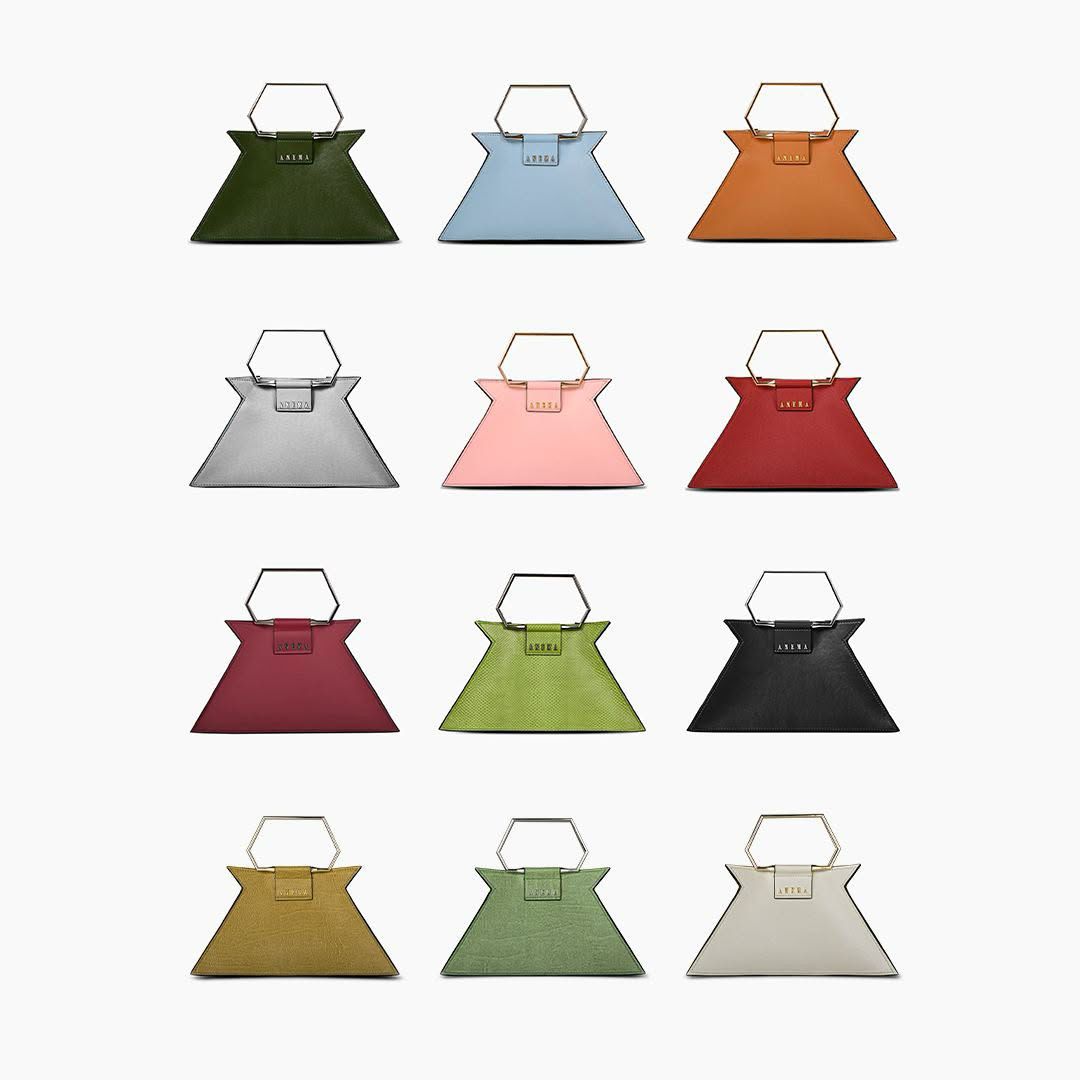
For example, by taking a look at the collection of vegan and eco-sustainable fashion by Anema, you find documented innovative materials: cactus fiber bags made from Desserto vegetable leather, apple peel bags produced with waste from the juice industry, certified recycled material bags. Transparency on the materials used is the first sign of an integral approach, told in detail on the dedicated page with our idea of sustainability.
FAQ
Are all brands that do green marketing guilty of greenwashing?
No, and it is important not to fall into the opposite excess. There are brands that communicate their sustainability legitimately because they are really making choices with impact. Greenwashing is communication that does not correspond to the facts.
How do I verify the certifications displayed by a brand?
All major certifications have an online database that can be consulted. You search for the company name or the license number reported by the brand and verify its validity.
Can a small craft company without certifications still be sustainable?
Yes, it is common. Certifications cost money and for the very smallest producers they are sometimes prohibitive. In those cases, however, one expects even greater transparency: who does it, where, how, with which precise materials.
Is there an authority that monitors greenwashing?
Yes, in various countries, market and advertising regulatory authorities have begun to sanction misleading environmental claims. The European Commission is working on a specific directive on "green claims".
To conclude
Greenwashing is a sign of the times: it indicates that sustainability has become important enough for consumers to push companies to invest in its narrative. A potentially positive thing, because it means the topic has entered the mainstream. At the same time, it imposes a new responsibility on us: to learn to read between the lines.

Written by Francesco Esposito


