



Apple peels: from waste to luxury bags
An apple peel that becomes a luxury bag. It sounds almost like a fairy tale, but it is a concrete industrial reality, born from an Italian insight that found its ideal home in the valleys of Trentino. Apple peel—or apple skin, if we use the international term—is one of those materials that challenges many common misconceptions about sustainability, starting with the idea that "true luxury" and "waste material" are incompatible worlds.
What is apple skin (and why is it called Apple Skin)?
What exactly is apple peel? It is a bio-based material that recreates the appearance and feel of animal leather using waste from the food industry, particularly apple processing: peels, cores, and fibrous residues that until just a few years ago ended up in landfills or were sent for composting. Today, however, they are dried, ground into a very fine powder, and transformed into a flexible, durable fabric that feels and looks like leather.
The name apple skin tells its origin well. "Skin" as in leather, of course, but also as in peel: that part of the apple that we normally eat absentmindedly or throw away. A play on words: what we consider waste is actually valuable raw material.
But there is one thing to keep in mind: apple skin is not made of 100% apple. The organic component is mixed with binding agents to create a workable product.
The story: from Trentino waste to Uppeal (Coronet)
Let's take a step back to talk about an Italian company that is fundamental to this story: Frumat. Based in South Tyrol, Frumat had the insight to collect waste from the apple juice industry—a very rich supply chain in that area—and ask what could be done with it. The answer came after years of research: an innovative material that combined the powder obtained from the waste with fabrics and binders to create something similar to leather.

We are in the heart of the circular bioeconomy, which takes waste and transforms it into value.
How apple skin is produced
The process is more fascinating than one might think, and it follows well-defined steps.
It all starts with the collection of waste: peels, cores, and pressing residues. These materials are dried to remove moisture and stabilize the raw material. At this point comes the grinding, which reduces everything to a very fine, homogeneous powder. That is the real starting point of the industrial process.
The powder is then mixed with binding agents—in the specific case of Uppeal, the bio-material, partially bound with PU, is applied to a cotton support—to achieve the flexibility and durability required for a quality fabric. The mixture is spread into sheets, pressed, and worked. Then the most creative part comes into play: coloring, texture, and finishing. This is where apple skin gains its personality, taking on the final appearance with which it arrives on accessories.
The actual composition of apple peel
Apple peel is a hybrid material that manages to combine the best of both worlds: the organic component—apple powder obtained from waste—and a part of binders and textile support that provide structure, durability, and longevity.
This formulation is a design choice. Combining it with the right binders makes it possible to obtain a fabric that truly lasts over time, while maintaining a significant bio-based component: a renewable portion that in traditional synthetic materials approaches zero. It is precisely in this direction, moreover, that research is working: gradually increasing the plant-based portion, experimenting with natural biopolymers, and pushing boundaries further and further.
Comparing apple peel with other vegan fibers
Every plant-based leather has its peculiarities and qualities, as well as its limitations. Compared to cactus fiber (Desserto), apple skin has a generally smoother and more uniform texture, perfect for minimalist designs and elegant finishes. Cactus fiber bags tend to have a more tactile, more "desert-like" character, even visually. Two different souls, both valid.
Orange fiber bags tell the story of Sicily; apple skin ones tell the story of Trentino. Two territories, two supply chains, two aesthetics.
And compared to hemp? We are on different ground. Hemp is a fabric in every sense, not a leather. Hemp bags have a very different structural performance, more rustic, more textile. Complementary, not alternatives.
How long does apple peel last?
The answer, based on real usage data, is reassuring. Uppeal apple peel has good mechanical resistance, withstands daily use well, and maintains its original appearance for years, provided there is some care in maintenance. It is not 100% waterproof, but it resists moisture well. The texture does not alter with use, and the color holds.
As with any natural or semi-natural material, small precautions make a difference: avoid prolonged exposure to direct sunlight, clean with a soft cloth, and do not use solvents or harsh products. Follow these basic rules, and an apple skin bag can truly accompany us for a long time.
Apple peel bags: applications in fashion
The leather goods sector is the one that has adopted apple peel most quickly. It is no coincidence: bags, wallets, and small accessories are the ideal ground for a material that wants to be beautiful, functional, and sustainable at the same time.
More and more international brands have started to include apple peel in their collections, among vegan bags and Uppeal accessories: the vocabulary is growing, and with it, the market offering.
The Anema model: apple peel bags Made in Naples
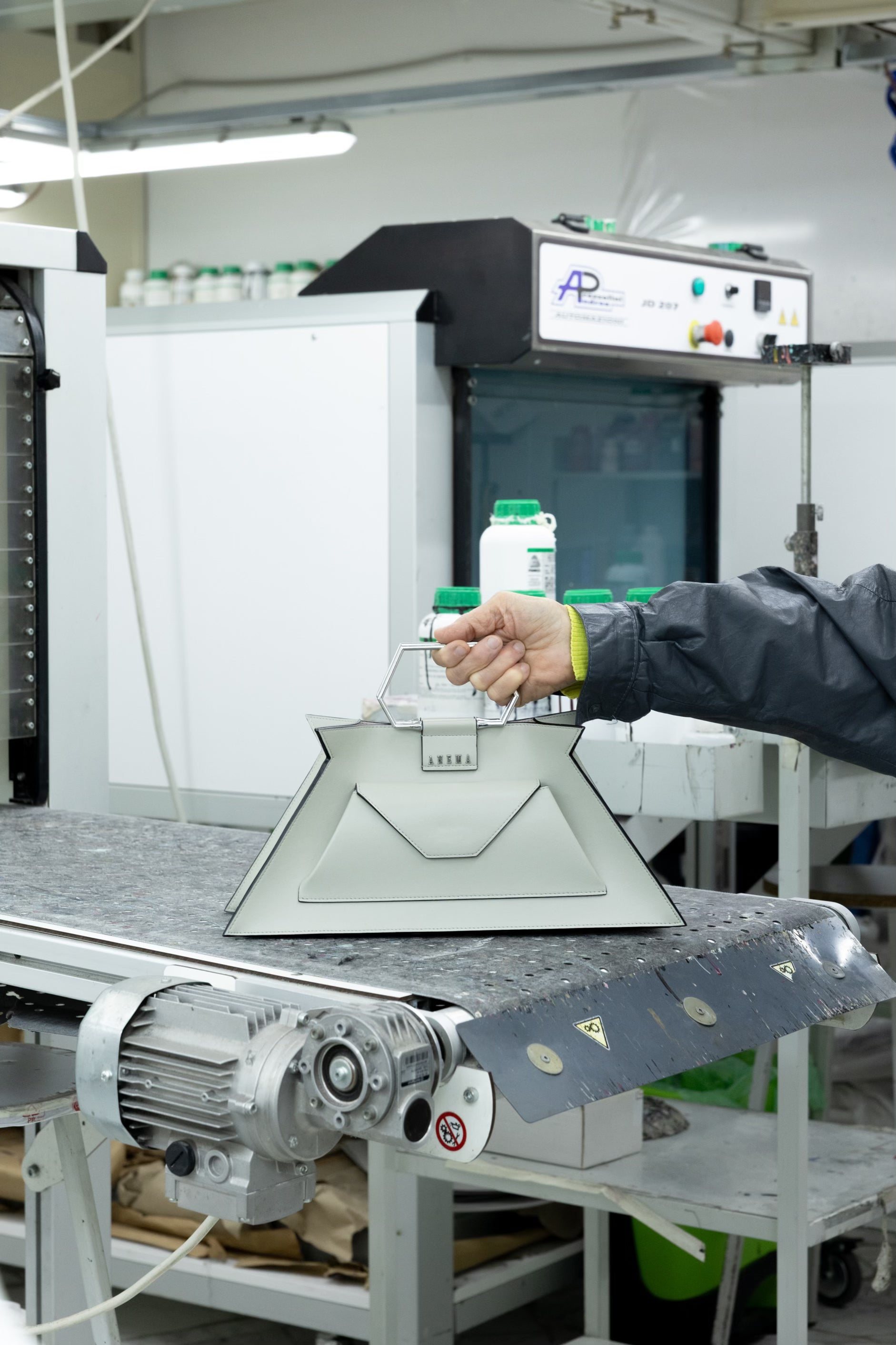
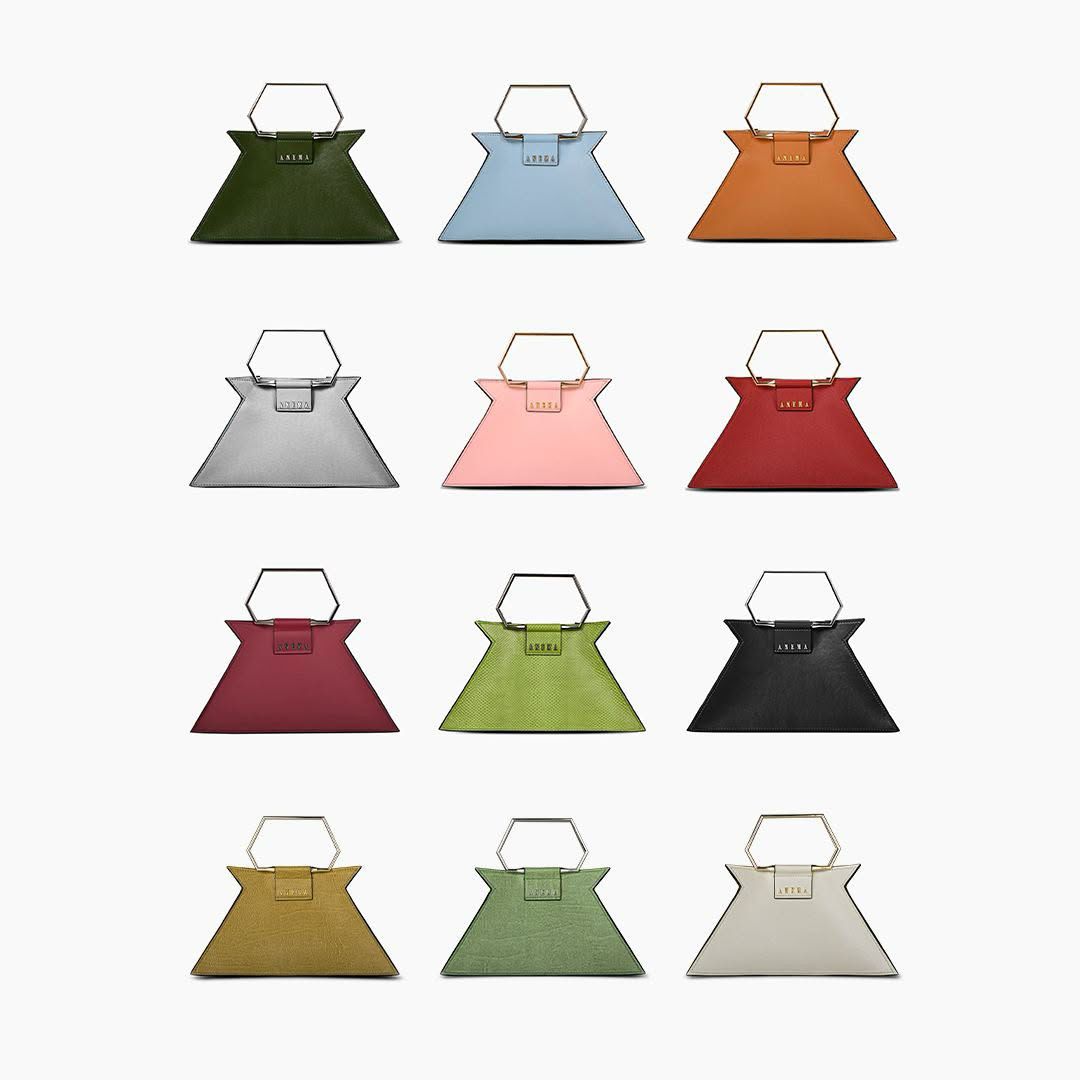
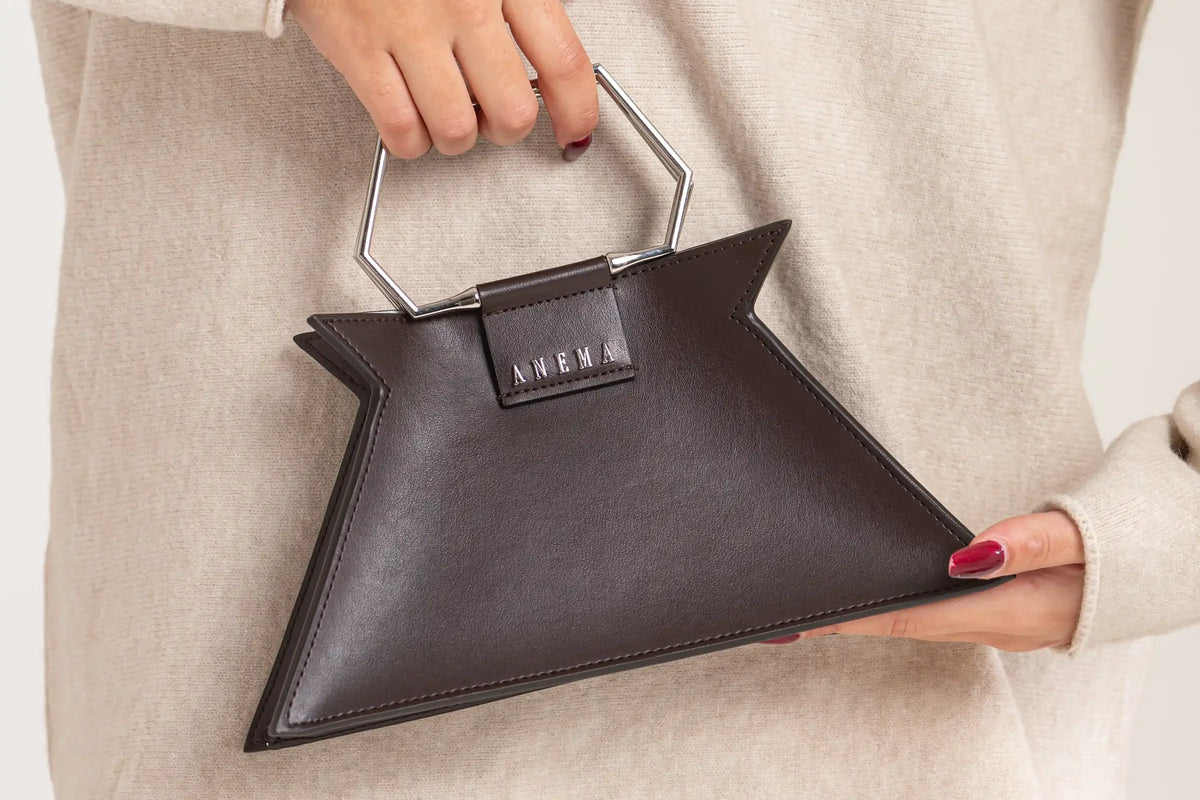
Anema has chosen to integrate apple skin into its collections, treating it with the mastery of Neapolitan craftsmanship. The brand's apple peel bags rest on a precise philosophy: innovative raw material combined with Italian know-how.

It is an approach consistent with the brand's underlying vision, explained in detail in the dedicated article, to discover our idea and lifestyle. And it ties into the PETA Approved Vegan certification, which guarantees the total absence of animal materials in the supply chain.
Is apple peel really sustainable? Lights and shadows
We have arrived at the uncomfortable question, the one that is needed to clear things up. Is apple skin really sustainable?
The honest answer is: more than many alternatives. There are many highlights. It valorizes food waste that would otherwise be disposed of. It does not involve animals. It has a lower carbon footprint compared to pure synthetic leathers and compared to animal leather. It represents a concrete example of the circular economy.
But there are also shadows, and they must be mentioned. The bio-based component is a minority compared to the total, as we have seen. The polyurethane used as a binder is a synthetic material, and this limits the biodegradability of the final product. Research is working to increase the plant-based percentage and to replace synthetic binders with more sustainable biopolymers, but we are still in a development phase. In the meantime, it already represents today one of the most compelling options available on the market.
FAQ
What apples is the apple peel material produced from?
From the waste of the juice industry, mainly apples grown in Trentino-South Tyrol in the case of Frumat/Uppeal. There are also other productions in the world that start from apples of different origins, but the principle is the same: to valorize the residues of the food supply chain.
Are apple peel and Uppeal the same thing?
Essentially, yes. Uppeal is the commercial brand under which the apple skin developed by Frumat is sold, after an industrial collaboration that took care of its finishing and international positioning.
Is apple peel 100% biodegradable?
No. It remains an option with a significantly lower environmental impact compared to fully synthetic vegan leathers.
How do you clean an apple skin bag?
With a slightly damp soft cloth, possibly a very diluted neutral detergent. Never solvents or harsh products. Avoid prolonged exposure to direct sunlight and store in a dry place.
Is it suitable for vegans?
Yes. Apple peel is 100% cruelty-free.
Final reflections
Apple skin tells a story that has it all: a concrete problem (food industry waste), an Italian insight, a supply chain that focuses on the link between agriculture and fashion, a final product that competes aesthetically with classic traditional materials. It is an important step in the right direction: that of a fashion that finally learns to look at waste as resources. And to learn more, we recommend taking a look at Anema's eco-sustainable vegan bags, including the apple peel models.

Written by Francesco Esposito


