



Orange fiber: how waste becomes luxury bags
Ohoskin is circular Made in Italy.
In Sicily, mountains of citrus waste are produced every year. So-called "pastazzo" - what remains after squeezing oranges, lemons, and mandarins - is a known industrial problem, which for decades has meant disposal costs, emissions, and waste. Then something happened: someone started to wonder if that material could be transformed into something else. The answer, after years of research, came in the form of innovative fabrics and leathers that today dress the international catwalks.
What is orange fiber and why is it revolutionizing sustainable fashion
Orange fiber is a material obtained from the cellulose present in the peels and waste from citrus processing. Just enough chemistry to understand: orange peel, even after squeezing, contains significant amounts of cellulose and pectin. It is precisely these components that, through extraction and treatment processes, can become spinnable fibers or moldable materials.
Orange peel in fashion is now a concrete industrial supply chain, with patents, investments, and real production.
How orange fabric is produced: the step-by-step process
The starting point is pastazzo: the pulp residue after industrial citrus squeezing. A material that is abundant in Sicily and which, until a few years ago, only involved management costs for producers. The pastazzo is processed to extract its cellulose, the same plant fiber found in cotton, wood, and hemp.
At this point, the cellulose undergoes a chemical treatment that makes it spinnable. It is a technique similar to those used to produce viscose or lyocell from other plant sources, but adapted to the specificities of the citrus raw material.
The resulting yarn is then woven using standard industrial processes and can be blended with other fibers to obtain mixed fabrics with specific characteristics. Prints, dyes, finishes: everything happens according to traditional techniques, but on a completely new starting base.
Ohoskin: the orange fiber conquering Italian leather goods
In Catania, a company was born that works with the organic raw material of oranges but for a non-food application: leather goods. We are talking about Ohoskin, which has developed orange fiber, a leather-like material for bags, shoes, and accessories.

The material is often workable, suitable for replacing traditional material in structured applications. The touch is velvety, the color rich, the finish premium. And there is a detail that makes the material truly special: it retains a very light citrus scent. A sensory trace of its origin that resists processing, finishing, and packaging: an identifying element that makes every accessory made from this material recognizable.
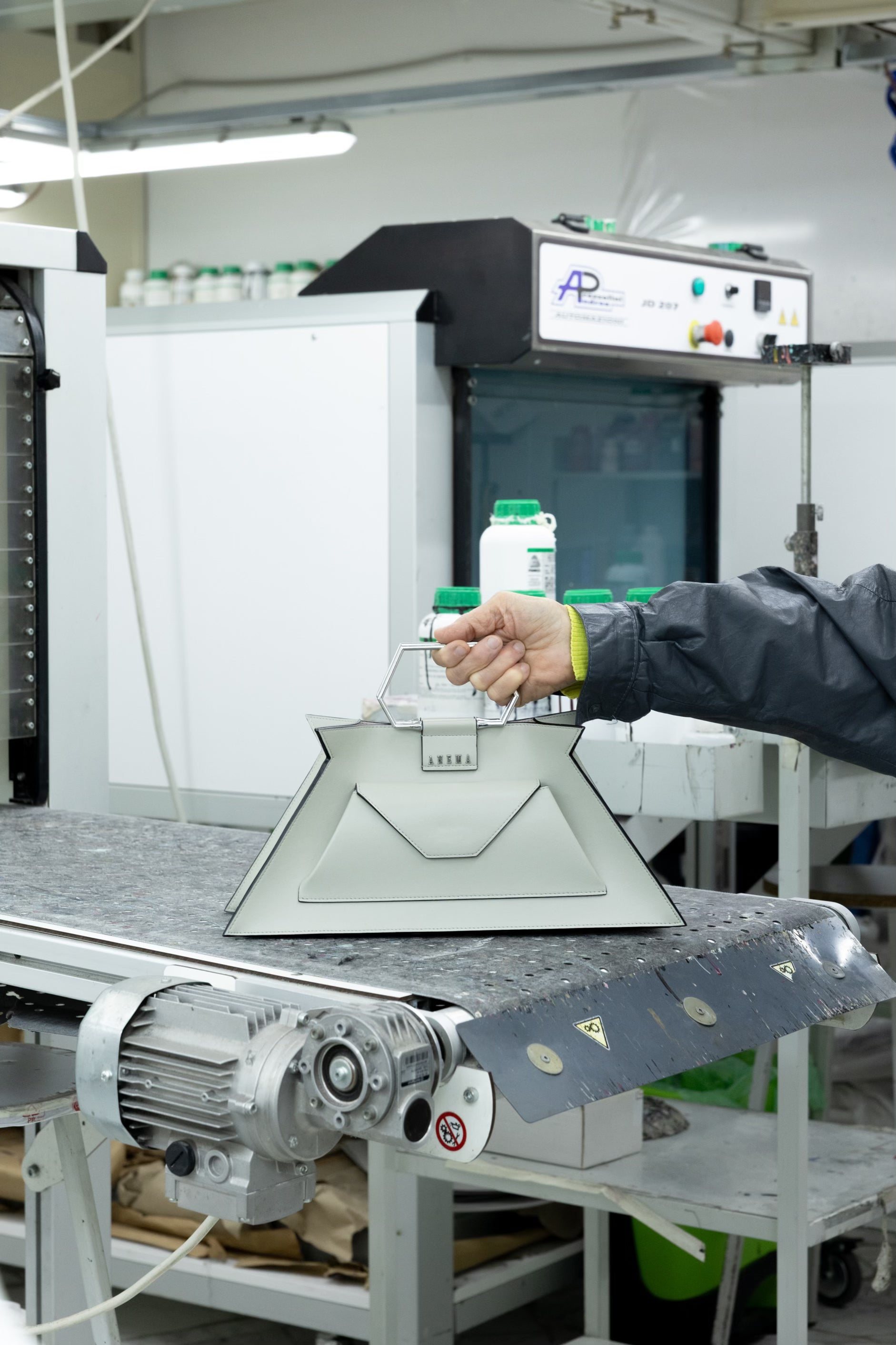
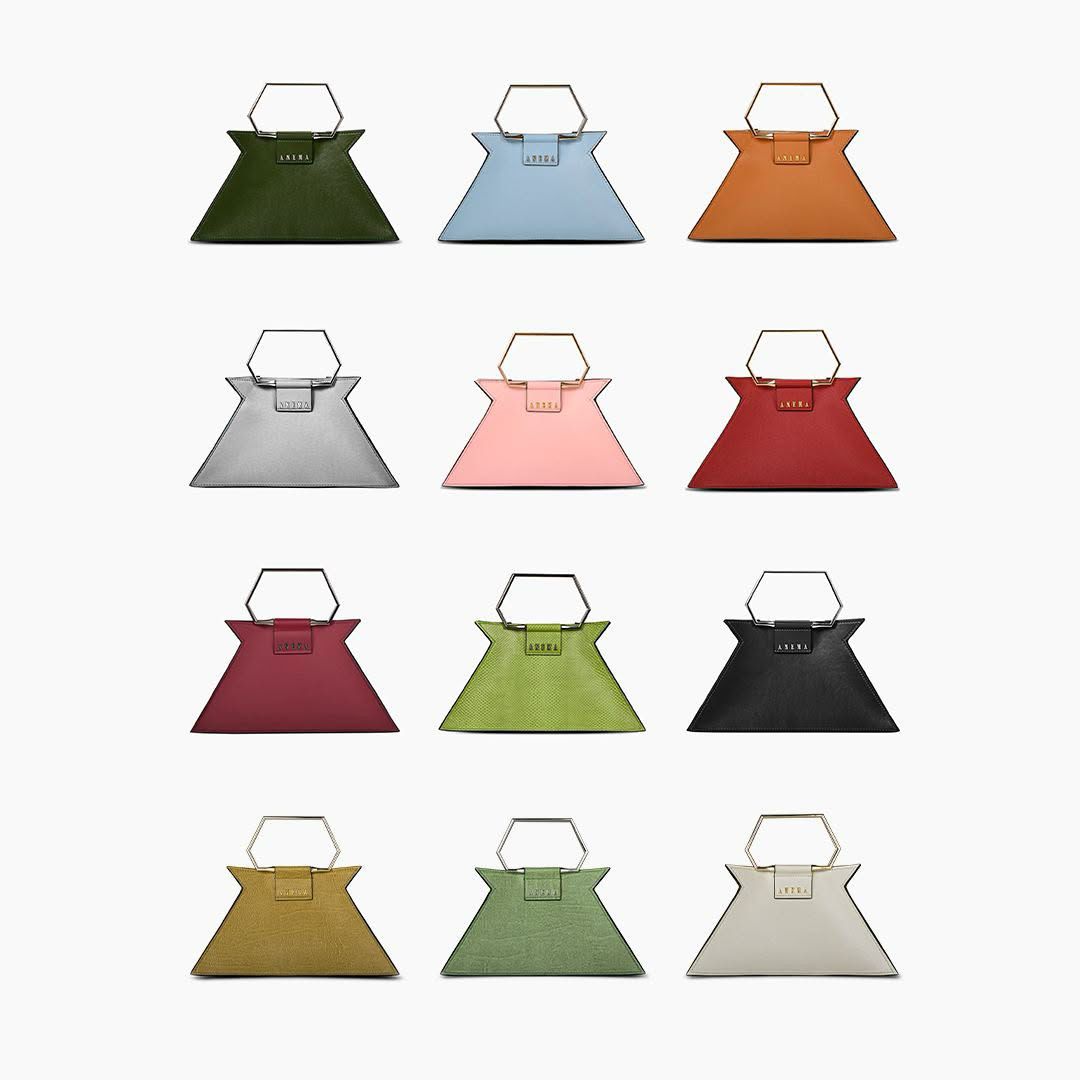
The orange fiber bags by Anema work precisely with this raw material, treating it with the Neapolitan craftsmanship that characterizes all the brand's collections.
Properties and characteristics that make orange fiber special
Now let's talk about what really makes the difference: how does this material behave in daily use?
Ohoskin is a structured material, it resists wear well, and maintains its shape over time. It has good resistance to moisture, although like many bio-based materials, it is not completely waterproof. Its velvety texture makes it particularly suitable for high-end products, where the sensory detail matters.
Both materials are 100% vegan, cruelty-free, and free of animal components at any stage of the process. For those looking for certified accessories, the PETA Approved Vegan certification is a guarantee verified by an external body.
Applications in fashion and leather goods: where orange fiber is setting the standard
The use of orange fiber has multiplied in recent years, occupying very different spaces.

In fashion, the fabric is used for shirts, blouses, dresses, and statement pieces where the tactile and visual performance is important, and indeed today the material is present in capsule collections by many other international brands. Some brands offer it as a true distinctive feature of their eco-oriented lines.
In leather goods, Ohoskin has found fertile ground especially in quality Italian craftsmanship. Bags, wallets, small accessories, belts. The material lends itself to traditional processing, sews well, cuts precisely, and allows for refined finishes.
And that is how today it is possible to browse the Anema Bag catalog dedicated to sustainable vegan bags, cactus fiber bags, and apple peel bags, to discover how vegan fashion is establishing itself, between innovation and luxury.
Environmental impact and circular economy: why orange fiber really pays off
Orange fiber is an almost textbook example of circular economy applied to a traditionally impactful industry like fashion. In Sicily, hundreds of thousands of tons of pastazzo are produced every year. This waste, to be disposed of, requires energy, transport, and often combustion. Recovering it to make fabrics is a step forward in curbing two problems.
Citrus cultivation would exist anyway, regardless of fiber production. There is no need to allocate new land, no need for additional water, no need for additional fertilizers. The raw material for orange fiber is, literally, a recovery product that would have been lost. It is what we call a "second life" in technical jargon.
The emissions profile is also interesting, because orange fiber requires fewer water resources and less land consumption. Compared to petroleum-derived synthetic leathers, the advantage is even more marked. And so we are faced with a significantly virtuous system.
FAQ
Is orange fiber really biodegradable?
Ohoskin leather is partially biodegradable.
How long does an orange fiber garment or accessory last?
With good maintenance, we are talking about years. Ohoskin leather has excellent mechanical resistance, is also used in the interior design sector for armchairs and chairs, and withstands daily use well, provided you avoid prolonged exposure to the sun and clean it with delicate products.
To conclude
The case of orange fiber is good for the heart, as well as for the planet. A widespread industrial problem has become a resource, raw material, economic wealth. Italian technology has conquered the world, starting from an intuition: what can we do with what we throw away? The answers, as we see, are many. Elegant fabrics, refined materials, bag collections that tell the story of Italian craftsmanship.

Written by Francesco Esposito


