


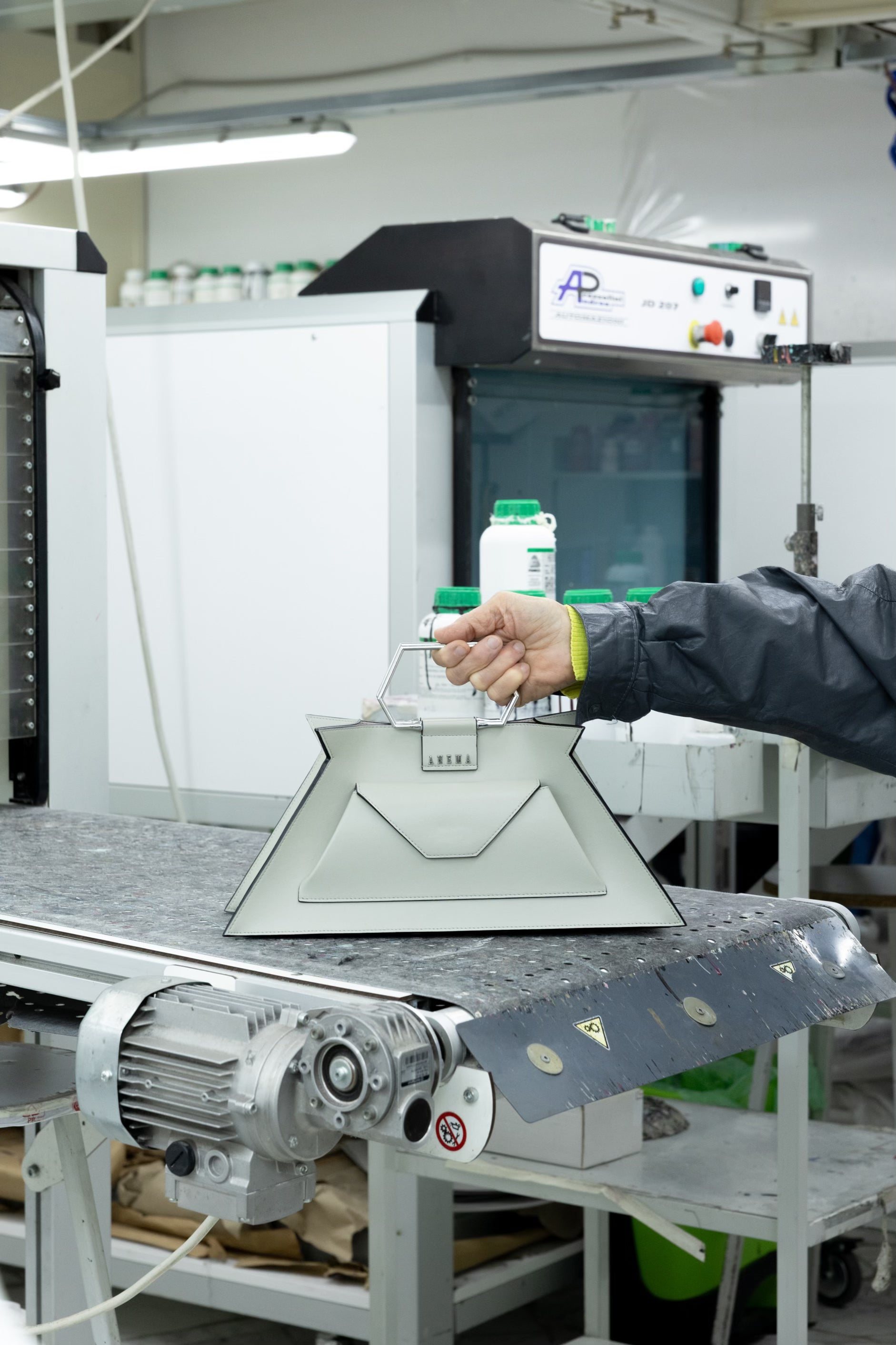


Neapolitan leather craftsmanship meets the materials of the future
The tradition of Neapolitan leatherwork is one of the highest expressions of Italian handcrafting. In an era in which fashion is called upon to meet new ethical and environmental responsibilities, master artisans are demonstrating that excellence and innovation can coexist, enhancing one another.
The roots of Neapolitan leatherwork: from the Middle Ages to today
The history of leatherworking in Naples has its roots in the Middle Ages, when tanners and leatherworkers organized themselves into the first guilds of crafts and trades. The Porta Capuana district was the beating heart of this production. Over the centuries, Naples' geographical position favored the arrival of fine leathers from North Africa, Spain, and the Levant, enriching the local heritage with diverse influences.
During the Renaissance, Neapolitan leatherworkers won over European courts with refined accessories: bags, belts, and weapon cases with embossed designs. The tradition of Neapolitan leatherwork became established as a system of knowledge passed down from father to son, while the Bourbon 1700s brought further prestige to the sector. In fact, the court of Charles III commissioned leather goods destined to become symbols of status and refinement.
The 1800s and early 1900s marked a period of great ferment with the opening of specialized workshops in the historic center and along Via Toledo. The Neapolitan school developed distinctive and recognizable techniques. This heritage has never been lost and today relies on a network of qualified artisans who preserve that ancient knowledge.
Artisanal techniques: the Campanian method
To speak of craftsmanship in Campanian leatherwork means to describe a system of knowledge that goes far beyond simple manual execution. The Campanian method is distinguished by a series of technical characteristics that define its identity and unmistakable quality.

The first among them is hand-sewing with the two-needle system, known as saddle stitching. Unlike industrial machines that use a continuous thread, two-needle sewing creates a solid interlocking stitch. Each stitch is independent and, in the event of a break, the damage remains localized. This technique requires years of practice to master and ensure the longevity of the item.
The Campanian artisanal method also includes a phase of hand-finishing the edges, known as edge painting. The leather edges are folded, glued, and finished with heated tools that compress the fibers, creating a compact and abrasion-resistant edge. The result is a geometric perfection that does not deteriorate over time.
Finally, the assembly of the internal structures is carried out with natural adhesives and hand-placed metal rivets. No structural point is left to chance.
From leather to materials of the future: the bio-based transition
Traditional leatherwork has always featured animal leather as its protagonist, but in recent years a new generation of bio-based materials is opening up unprecedented scenarios for artisans who do not want to give up quality, but want to respond to the environmental and ethical challenges of today.
Among the most innovative materials are cactus fiber bags, made from a non-woven fabric derived from nopal leaves. Equally interesting are apple skin bags, produced by valorizing the waste from the food industry. The material is born from the processing of dried pulp and skins combined with bio-based polyurethane. Orange fiber bags, on the other hand, represent one of the most surprising discoveries of Italian innovation.
For Campanian artisans, working with these new materials is interesting, thanks to their extreme sensitivity and their ability to listen to the materials.
Campanian craftsmanship meets vegan fashion
The market for eco-sustainable vegan bags has grown exponentially in the last decade. The combination of the craftsmanship of our Campanian productions and the new plant-based materials is demonstrating that accessible luxury can also be ethical. A bag crafted using the techniques of Neapolitan tradition, on a support of cactus fiber or apple skin, offers the same longevity as a traditional leather item, with a reduced environmental impact.
One element that has contributed to improving this transition is the PETA Approved Vegan certification. Issued by the international organization for animal rights, it certifies that no component of the final product comes from animals. For brands operating in this sector, obtaining the PETA mark is proof of a real commitment throughout the entire supply chain.
Made-to-order production: the anti-waste model
There is another aspect of our Campanian artisanal production that deserves attention, namely the made-to-order production model. While the global fashion industry produces millions of pieces in advance, many of which will go unsold or be destroyed, the Neapolitan artisan workshop has always worked on commission. What has been requested is made, in the necessary quantity and for the customer who has already chosen it.

This approach today proves to be one of the most effective tools for reducing overproduction. There are no warehouses full of unsold pieces, but the bag is created when there is a person who wants it, with the characteristics that exactly that person has chosen.
When working piece by piece, moreover, the selection of the bio-based material is done with greater care. Every bag therefore starts from scratch, with a choice that is conscious and is reflected in the final result.
FAQ
What is meant by the Neapolitan leatherwork tradition?
This expression refers to the set of techniques, styles, and knowledge passed down through generations of Campanian artisans in the making of bags, accessories, and leather or alternative material items.
Do bio-based materials hold up against traditional leather in terms of durability?
Latest-generation fibers such as cactus fiber or apple peel, worked with quality artisanal techniques, offer high mechanical resistance and longevity.
What does the PETA Approved Vegan mark certify?
The mark certifies that the product does not contain ingredients or components of animal origin in any part of its structure, from the main material, to the linings, and even the stitching, glues, and accessories. The certification involves a verification of the production supply chain and is issued only after an in-depth analysis.
Conclusion
Over the centuries, Neapolitan leatherwork has known how to integrate external influences, adopt new materials, and respond to changes in taste without losing its identity. Today, facing the challenge of bio-based materials and conscious fashion, it is making yet another adaptation based on the same care that has always distinguished the work of its workshops. The result is a new generation of objects that last, tell a story, respect the planet and those who wear them.

Written by Francesco Esposito